73.6%
of employees in reviewed workplace studies experienced microaggressions.1
Inclusiveness begins with action
The Macro Movement helps middle and high school students recognize microaggressions, understand their impact, and respond with confidence.
501(c)(3) A registered 501(c)(3) nonprofit organization
Microaggressions are subtle words, actions, or behaviors that communicate prejudice or exclusion. While a single incident may seem small, repeated microaggressions accumulate over time, contributing to chronic stress, anxiety, and diminished well-being.
We give students the language and tools to recognize these moments, understand their impact, and respond productively.
Why this matters
Microaggressions are easy to dismiss in the moment. The research on what they leave behind is not.
of employees in reviewed workplace studies experienced microaggressions.1
participants across research linking greater microaggression exposure to higher anxiety, depression, and stress.2
find repeated microaggressions associated with poorer mental and physical health and worse workplace outcomes.1
What we teach
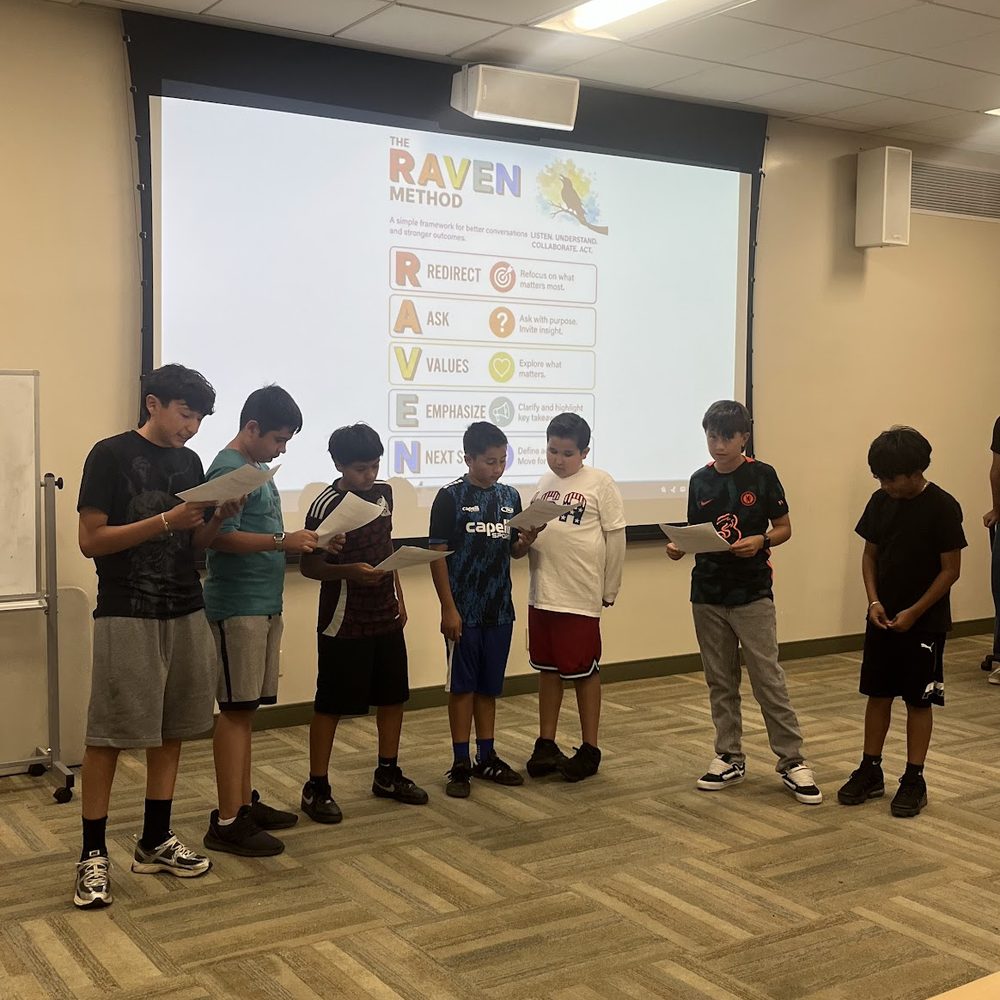
Sessions end with students on their feet, taking a real scenario through the five RAVEN steps out loud.
Reading the framework off a slide is not the same as saying it in front of the room. The practice is the point — by the time a session ends, every student has had to find the words themselves.
Identify microaggressions in everyday school and social situations.
Explore the assumptions behind them and why their impact can differ from their intent.
Practice constructive ways to speak up, ask questions, and support others.
Our impact
Drawn from a pool of 80 students, anonymous surveys conducted immediately before and after a Macro Movement presentation show a substantial shift in students’ reported understanding and preparedness.
Percentage of respondents who rated their understanding a 4 or 5 out of 5.
Before the session, 9.1 percent, or 5 of 55 respondents, selected 4 or 5. After the session, 86.7 percent, or 39 of 45 respondents, selected 4 or 5. This is a 77.6 percentage-point change.
Percentage of respondents who rated their ability to confront a microaggression a 4 or 5 out of 5.
Before the session, 3.6 percent, or 2 of 55 respondents, selected 4 or 5. After the session, 73.3 percent, or 33 of 45 respondents, selected 4 or 5. This is a 69.7 percentage-point change.
Methodology: Based on anonymous pre-session and post-session surveys. Pre-session n=55; post-session n=45. Percentages show respondents selecting 4 or 5 on a five-point scale. The surveys were not individually matched.
For schools
Flexible formats make it possible to start the conversation in the setting that works for your students.
Request Workshop DetailsGo deeper
The full curriculum, and the published research the RAVEN method is built on.
Formats, timings, and what a session actually looks like from a student's seat.
The schools already running this, and how to start a chapter at yours.
The students who write the material and stand up in front of the room.